





Reed SF
Optical Cartridge
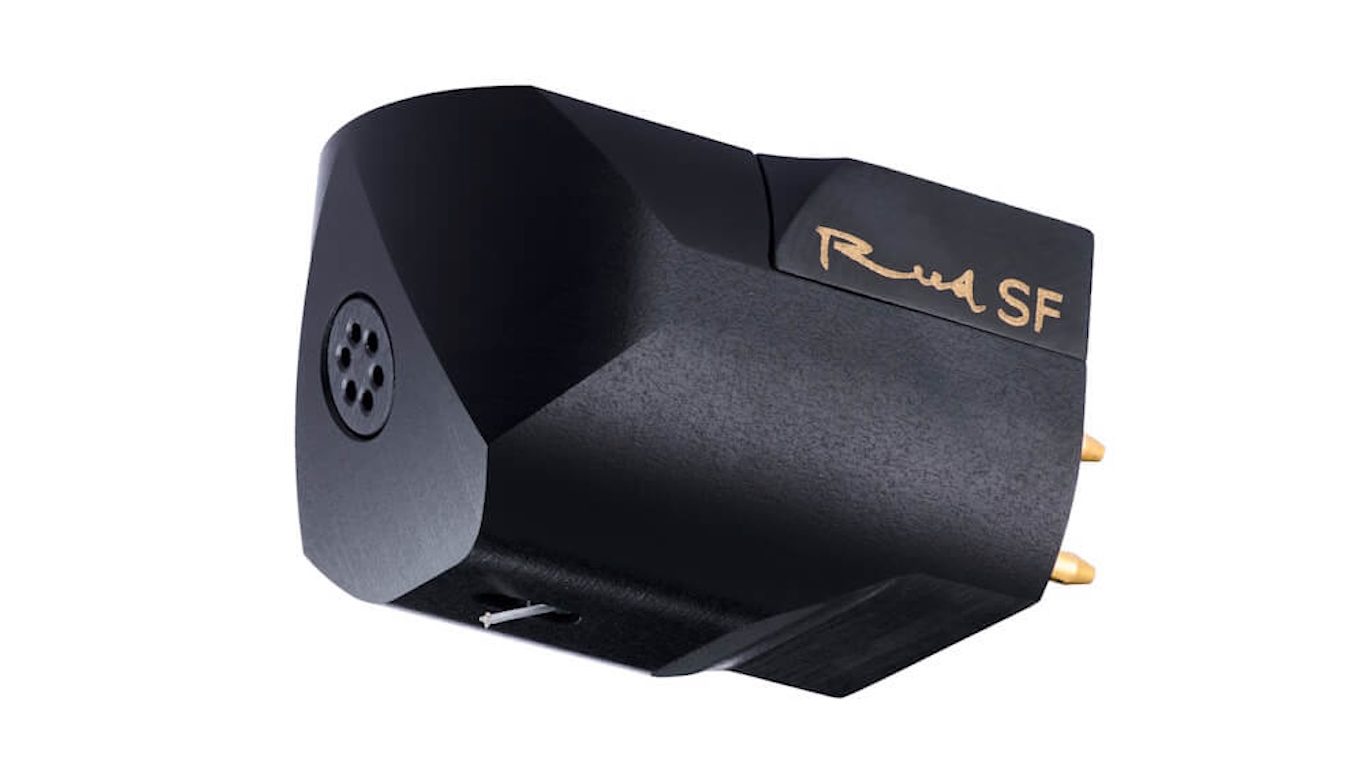
Reed are proud to present their latest project — the Reed SF optical cartridge, developed in collaboration with the renowned Japanese company DS Audio.
Unlike traditional MC or MM cartridges, optical cartridge technology offers unique advantages that elevate the listening experience.
Free from magnetic resistance and characterised by an exceptionally low moving mass, the stylus moves with remarkable smoothness and precision.
These features result in superior sonic performance — something every vinyl enthusiast will appreciate.
To fully harness the potential of this technology, Reed placed great emphasis on selecting the optimal housing material, focusing on acoustic neutrality and effective vibration damping.
The cartridge body material must be acoustically passive, homogeneous, and exhibit high damping across the entire operational range.
To identify the most suitable option, Reed conducted a comparative study of three materials: aluminium, Panzerholz (tankwood), and 100% HD phenolic resin.
Each material sample, identical in shape, was subjected to shock waves of equal amplitude.
The decay times of induced acoustic signals were then measured at a fixed distance from the impact point.

Aluminium: sound dissipated after ~120 ms
Panzerholz: ~70 ms
100% HD phenolic resin: just ~15 ms
Given these findings, along with the resin’s additional benefits — including low surface roughness, high density, and excellent elasticity — Reed chose 100% HD phenolic resin as the material for the Reed SF cartridge body.
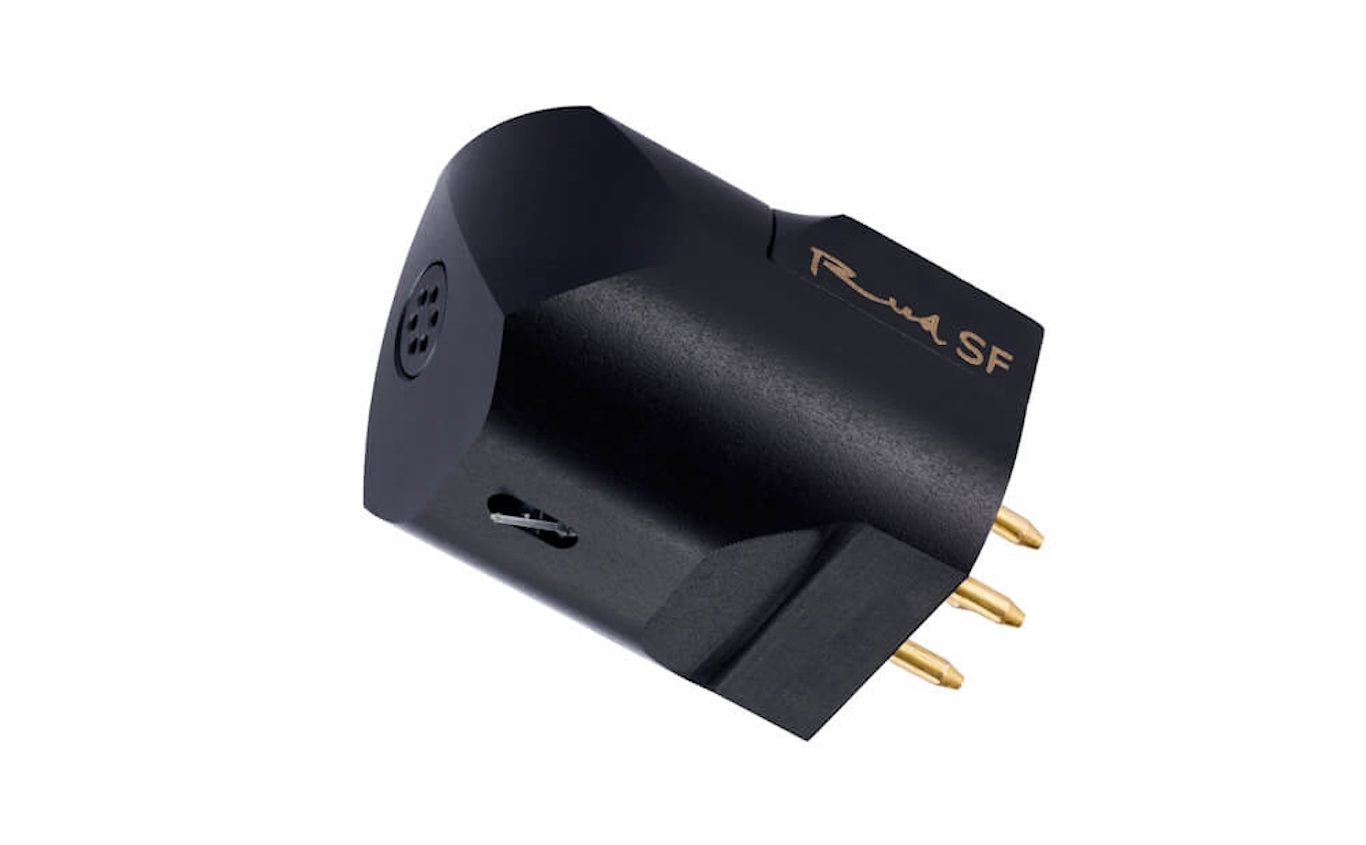
To ensure durability and consistent performance, the cartridge housing was also engineered to minimise dust intrusion.
Independent LED and photo-detector arrangement for the left and right channels is implemented in the REED SF cartridge.
Reed SF Specifications
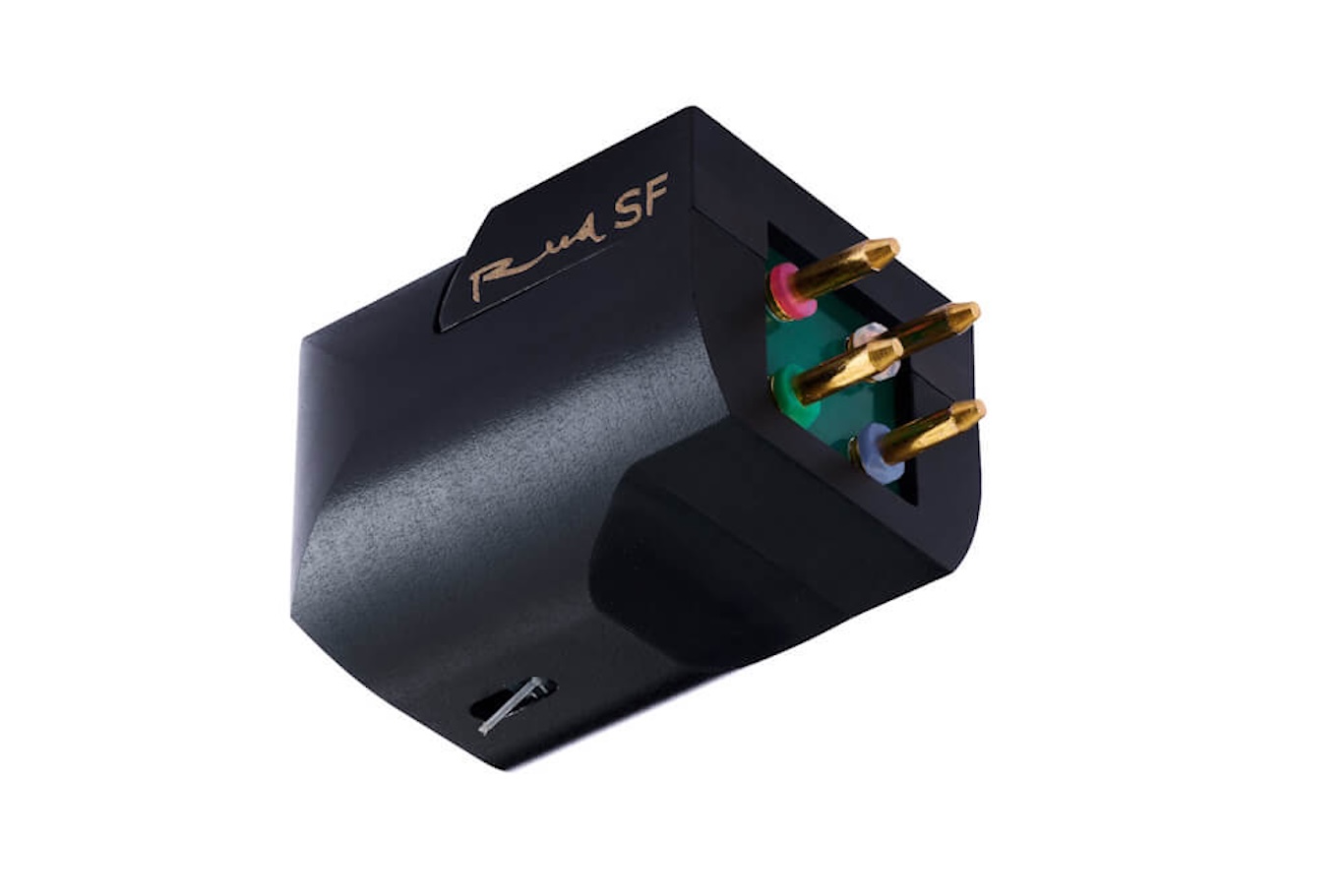
Signal output – Photo-electric Conversion
Channel separation – 27 dB more(1kHz)
Weight – 9.8 g
Output signal level – 70 mV
Canti-lever – Sapphire
Body material – HD phenolic resin / aviation aluminium
Needle pressure – 2.0 g~2.2 g (2.1 g is recommended)
Stylus – Micro Ridge
Reed SF Compliance – 12 μm/mN
The Basic principle of the optical cartridge
First, Reed will explain the difference of detection principle between the optical cartridge and MM / MC cartridge.
Both the MM / MC cartridge and the optical cartridge read the record groove through the needle, but the usual MM / MC cartridge detects the music signal by vibrating the magnet (or coil) in the magnetic field.
On the other hand, optical cartridges detect music signals by capturing shadow changes (brightness changes) using LEDs and PD (photo cells).
Because MM / MC cartridges generate electricity by cutting off the magnetic field, magnetic resistance always occurs when the magnet (or coil) moves.

However, the optical cartridge detects only the change in brightness (shadow movement), so no magnetic resistance is generated when the vibration system moves.
Since there is no magnetic resistance applied to the vibration system, the tip of the needle can move smoothly.
This is the primary advantage of optical cartridge technology.
To detect music signals, the MM / MC cartridge must move the magnet or the core and the coil. However, in the case of optical cartridges, it is only necessary to move a light shading plate with a thickness of only 100 microns, so the moving mass is very low.
This is an additional advantage of optical cartridge technology.
What is the detection principle of the optical cartridge?
The optical cartridge detects movement of the needle using infrared LED, light shielding plate and two PD (photo cells).
The operating principle is simple, the shading plate vibrates in front of the LED, and the PD (photo cells) behind it detects the change in brightness.
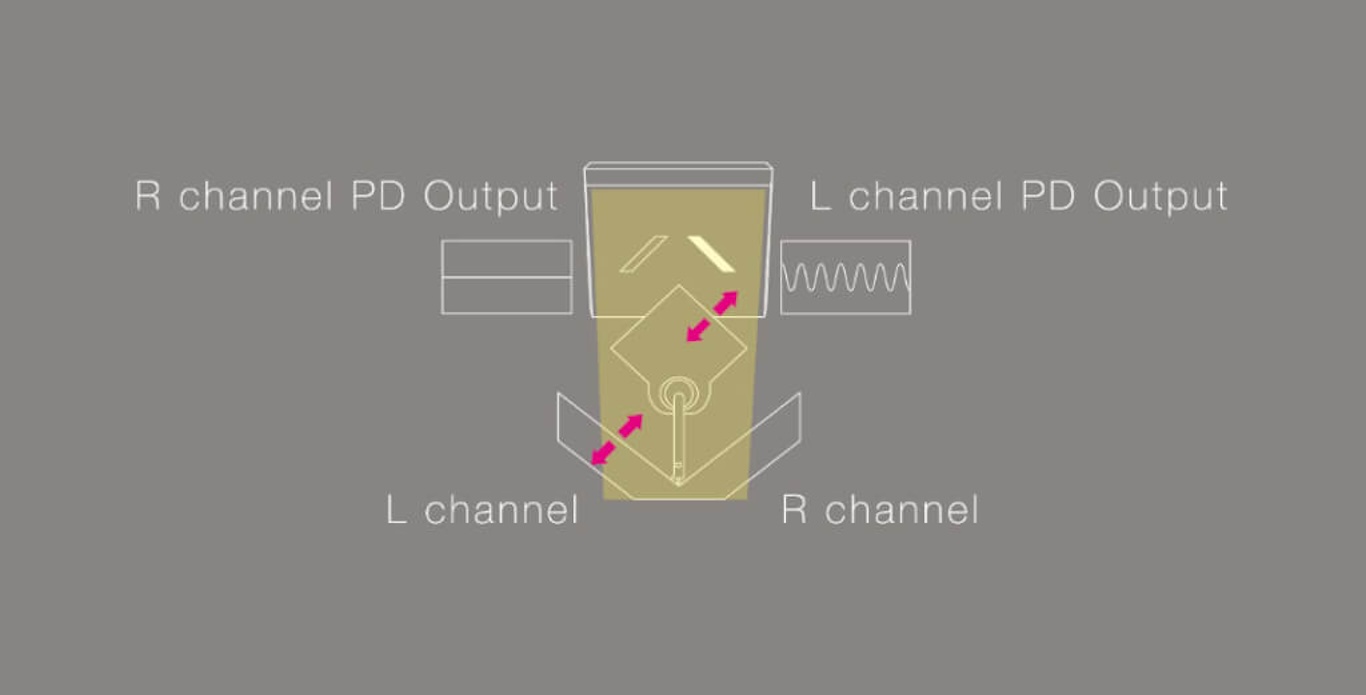
Reed explain how to independently detect L and R channel signals from one shading plate.
The above diagram is a view of the light shielding plate and the photo cells from the position where the LED is located.
When the groove of the record vibrates (oblique 45 degrees), the vibration is transmitted from the tip of the needle to the cantilever, and the shading plate also vibrates together.
Since the shading plate vibrates in such a way as to block the light of the front LED, the brightness entering PD (photo cells) changes continuously from bright → dark → bright → dark.
As the photo cells detect changes in brightness created by record groove movement, the output voltage changes accordingly the movement of the shielding plate will be read as 2 separate stereo channels, by 2 independent photo detectors.
The angular movement of the shielding plate ensures that each photo detector can only pick up information from its corresponding channel. Information from the parallel movement of the opposite channel will not be read, ensuring accurate channel balance and channel separation.
Since the brightness of the photo cell does not change because the motion of the light shielding plate becomes a parallel movement on the side of the reverse PD (photo cells) side, it is possible to detect audio signals of the left and right channels with one light shielding plate.
This basic detection principle is exactly the same as the photoelectric cartridge 40 years ago.
The important point here is that the output of the PD (photo cell) is the Pure analog sound because the movement of the shading plate = the motion of the record board is output as a voltage change. It is NOT Digital Sound.
 The designer and company owner, Vidmantas Triukas, is radio engineer, working in hi-fi audio equipment field since 1985.
He was working in scientific acoustic and ultrasound area, researching the transmission of acoustic noise in different materials and has three patented inventions in this field.
In 1987, Vidmantas Triukas with a few friends built an “audio set”, consisting of turntable, speakers and an amplifier, and presented it in USSR’s largest technical achievement trade show in Moscow.
For various innovations ( turntable motor automatic speed control, amp with very low linear distortions etc.) it was awarded a bronze medal in audio equipment category.
After 1990s Vidmantas started business in another area, however audio still was his passion all these years.
In 2007 he decided to start business and offer something amazing to the market.
After a year of continuous research, prototyping, design and testing he offered first Reed series tonearm.
Since then, his company works for its valued customers and tries to bring something special to the audiophile community.
Despite that Vidmantas is an inventor and a technical designer, he is also very passionate art lover. He studied art history in Sankt Petersburg (formerly Leningrad) in 1980 – 1982.
The designer and company owner, Vidmantas Triukas, is radio engineer, working in hi-fi audio equipment field since 1985.
He was working in scientific acoustic and ultrasound area, researching the transmission of acoustic noise in different materials and has three patented inventions in this field.
In 1987, Vidmantas Triukas with a few friends built an “audio set”, consisting of turntable, speakers and an amplifier, and presented it in USSR’s largest technical achievement trade show in Moscow.
For various innovations ( turntable motor automatic speed control, amp with very low linear distortions etc.) it was awarded a bronze medal in audio equipment category.
After 1990s Vidmantas started business in another area, however audio still was his passion all these years.
In 2007 he decided to start business and offer something amazing to the market.
After a year of continuous research, prototyping, design and testing he offered first Reed series tonearm.
Since then, his company works for its valued customers and tries to bring something special to the audiophile community.
Despite that Vidmantas is an inventor and a technical designer, he is also very passionate art lover. He studied art history in Sankt Petersburg (formerly Leningrad) in 1980 – 1982. 

Reviews
There are no reviews yet.